


How Gum Disease Can Worsen Diabetes, Heart Disease, and More
Most people think of oral health as a simple routine, brush twice a day, floss when you remember, and visit the dentist only when something hurts. It rarely feels urgent. And it rarely feels connected to anything beyond the teeth.
But what happens in your mouth can affect the rest of your body in ways most people are never told about. For anyone already dealing with a condition like diabetes, heart disease, or a difficult pregnancy, this is important to understand.
Most conversations about oral health ask whether it is connected to overall health. The answer is yes. But the more useful question is: what does poor oral health actually do to a disease that already exists?

From Risk Factor to Multiplier
We are used to thinking of health risks as a list, smoking, poor diet, lack of exercise, family history. Oral health on that other hand, is treated as just one more item on that list.
But gum disease, specifically periodontitis, the advanced stage that affects the bone and tissue holding your teeth in place, does not simply add to your risk. It makes existing conditions worse. It increases the severity, speeds up the progression, and raises the chance of complications in diseases that are already present.
Think about it this way, two people can have the same diagnosis, following the same treatment plan can have outcomes that looks very different. Poor oral health is often the underlying reason that rarely gets looked at.
From Risk Factor to Multiplier
We are used to thinking of health risks as a list, smoking, poor diet, lack of exercise, family history. Oral health on that other hand, is treated as just one more item on that list.
But gum disease, specifically periodontitis, the advanced stage that affects the bone and tissue holding your teeth in place, does not simply add to your risk. It makes existing conditions worse. It increases the severity, speeds up the progression, and raises the chance of complications in diseases that are already present.
Think about it this way, two people can have the same diagnosis, following the same treatment plan can have outcomes that looks very different. Poor oral health is often the underlying reason that rarely gets looked at.
What Is Actually Happening in the Body
The key word here is inflammation. Gum disease is, at its core, chronic inflammation of the gums. The bacteria in infected gum tissue release harmful substances into the bloodstream. This keeps the immune system in a constant state of low-level alert.
For someone already managing diabetes, heart disease, or a high-risk pregnancy, this matters a great deal. The body is already working hard. When gum disease adds more inflammation on top of that, it becomes harder for the body to stay in control. Healing slows down. Disease management becomes harder. Not because the treatment plan is wrong, but because there is an unaddressed problem progressing in the background.
A note on the biology: Gum disease involves close to 30 species of bacteria that produce substances called endotoxins. When these enter the bloodstream, the immune system is forced to stay active which directly affects how the body manages blood sugar, heart function, and overall immune response.

Diabetes: The Clearest Example
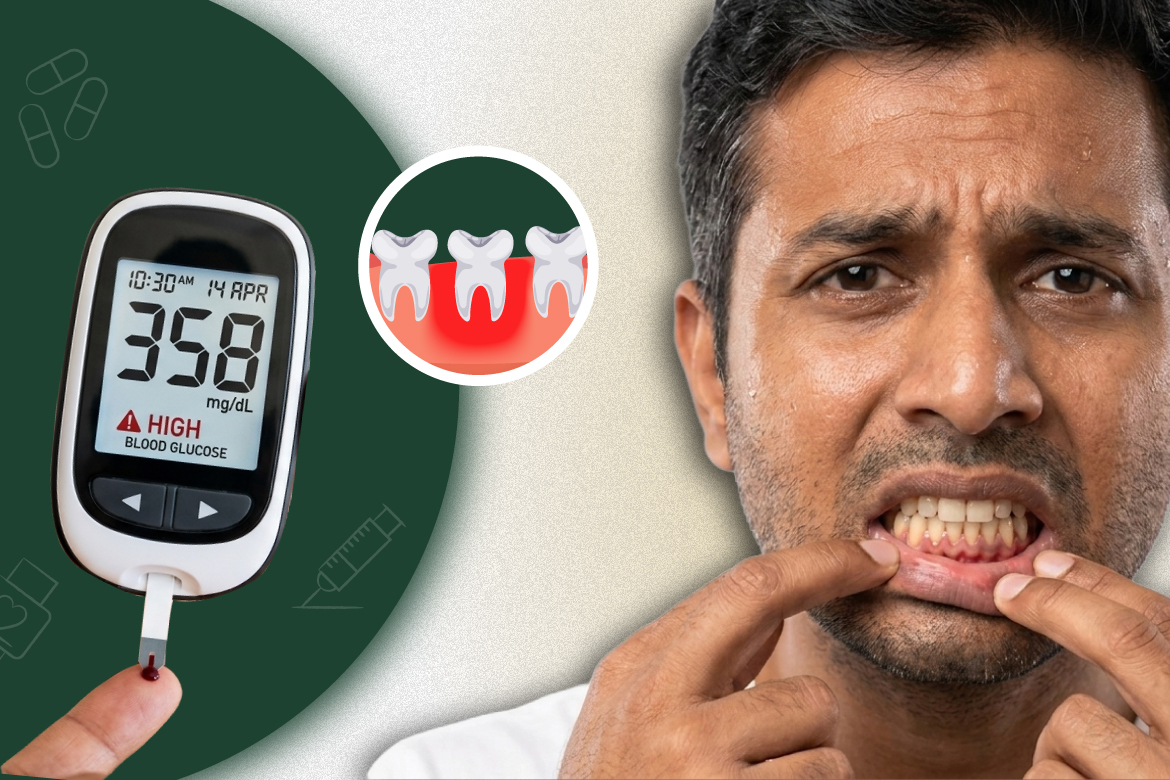
The link between gum disease and diabetes is the most studied, in fact the most direct link. Gum disease increases insulin resistance, which means the body struggles to regulate blood sugar. Even when diet and medication are well managed, blood sugar levels can stay higher than they should be.
People with untreated gum disease consistently have higher HbA1c levels, the marker that shows how well blood sugar has been controlled over time. What is especially significant is that treating gum disease brings these levels down. Clinical studies have shown improvements comparable to adding a new diabetes medication, from a routine dental procedure.
For someone managing diabetes, dental care is part of managing the condition itself.
Diabetes: The Clearest Example
The link between gum disease and diabetes is the most studied, in fact the most direct link. Gum disease increases insulin resistance, which means the body struggles to regulate blood sugar. Even when diet and medication are well managed, blood sugar levels can stay higher than they should be.
People with untreated gum disease consistently have higher HbA1c levels, the marker that shows how well blood sugar has been controlled over time. What is especially significant is that treating gum disease brings these levels down. Clinical studies have shown improvements comparable to adding a new diabetes medication, from a routine dental procedure.
For someone managing diabetes, dental care is part of managing the condition itself.
The Effect Goes Beyond Diabetes
The impact of gum disease does not stop at blood sugar. In people who have both gum disease and chronic illness, the risks extend further, leading to higher chances of stroke, worsening heart problems, faster kidney damage, and growing evidence connecting gum bacteria to cognitive decline.
Researchers have found bacteria linked to gum disease in the heart, spinal column, and brain, all carried there through the bloodstream over time.
1.7x
Increased risk of a first heart attack in patients with severe gum disease
2.1x
Increased risk of stroke, even after accounting for smoking and diet
Less than 40%
of pregnant women seek preventive dental care during pregnancy
For pregnant women, the concern is particularly important. Hormonal changes during pregnancy make gum tissue more prone to infection. Reports show, up to 75% of pregnant women develop some form of gum inflammation. When this is not treated, the resulting inflammation has been linked to gestational diabetes and high blood pressure during pregnancy.
A 2025 study found that women who received preventive dental care during pregnancy had lower rates of both conditions. And yet, most pregnant women do not visit a dentist at all during their pregnancy.

A Cycle That Keeps Getting Worse
What makes this particularly difficult is that it works in both directions. A chronic illness weakens the immune system, which makes the gums more vulnerable. Worsening gums drive more inflammation, which makes the illness harder to control. Each one feeds the other.
Gum disease and existing illness make each other worse, and without treatment, this cycle continues.
A Cycle That Keeps Getting Worse
What makes this particularly difficult is that it works in both directions. A chronic illness weakens the immune system, which makes the gums more vulnerable. Worsening gums drive more inflammation, which makes the illness harder to control. Each one feeds the other.
Gum disease and existing illness make each other worse, and without treatment, this cycle continues.
Why It Often Goes Unnoticed
Gum disease is easy to miss because it usually does not hurt. There is no sharp pain, no obvious warning sign. Gums may bleed a little when brushing. There may be some mild swelling. These are easy to ignore and easy to put off.
But not feeling pain does not mean there is no damage. The effects on the rest of the body continue in the background. By the time gum disease becomes uncomfortable enough to act on, it may have already been affecting other conditions for months or even years.
What This Means for You
If you are managing diabetes, heart disease, or going through a pregnancy, dental care is not separate from your treatment. It is part of it.
Patients come in doing everything right, taking their medication, following their diet, staying consistent with their care. And yet, their numbers don’t improve the way they should. In many of these cases, the missing piece is not another prescription. It is untreated gum disease.
When we address that, things begin to change. Blood sugar becomes easier to control. Recovery improves. Complications become less likely. Not because we added something new, but because we stopped something that was quietly working against the body.
Oral health is not only about cleaning your teeth or treating pain. It can also become a constant source of inflammation if gum disease is left untreated.
Ideally, your doctor and dentist should be aware of each other’s findings and treatment plans. This helps maintain your overall health and prevents situations where one condition worsens another without being diagnosed.
The next appointment that changes your wellbeing might not be with your doctor. It might be with your dentist.